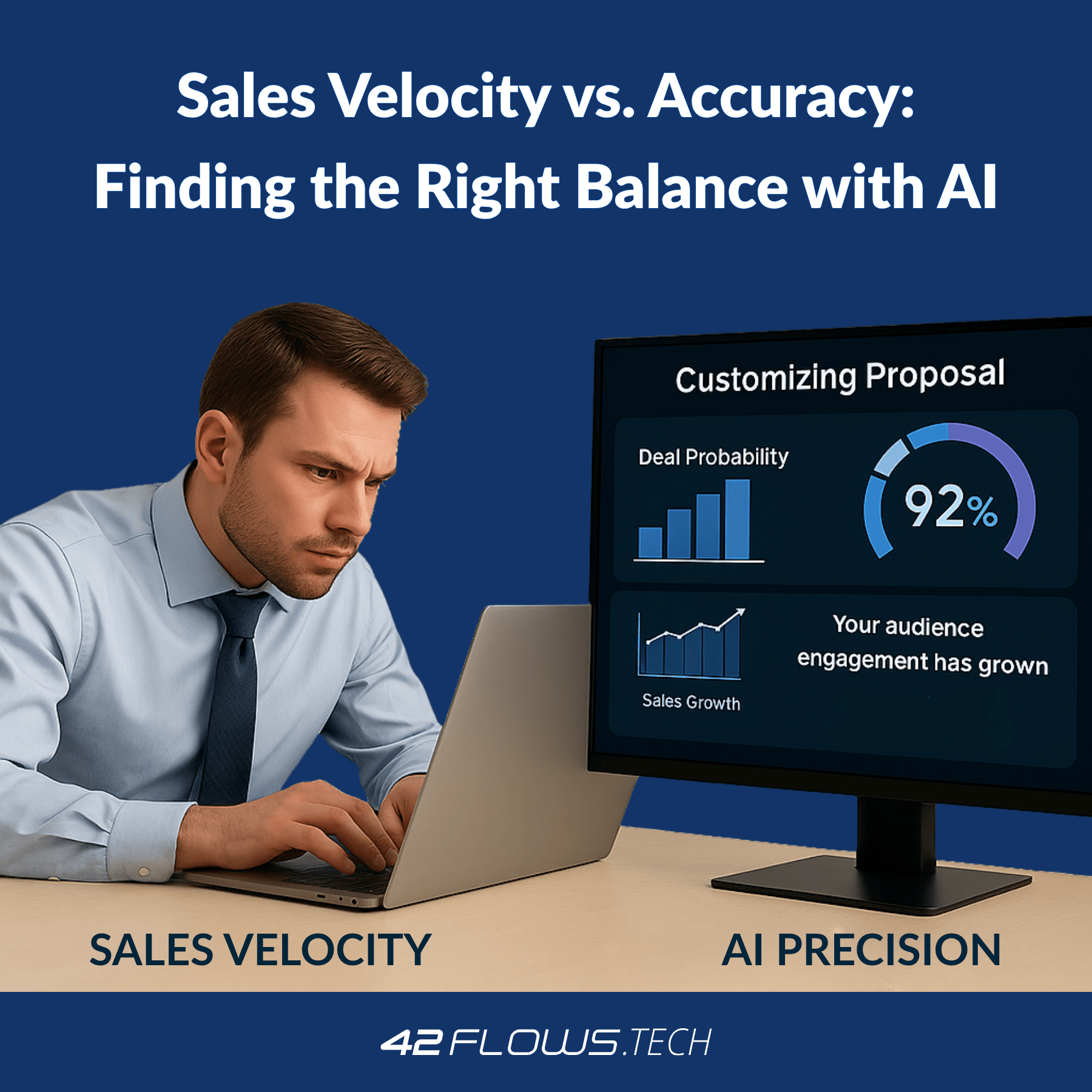

In sales, speed is everything. The faster a company reaches out to prospects, delivers proposals, and follows up, the higher the chances of closing a deal. But what happens when speed comes at the cost of accuracy? Sending out poorly qualified leads, generic proposals, or misaligned solutions can lead to lost opportunities and damaged credibility.
This is where AI-driven sales automation comes in. AI can help teams move faster while maintaining the precision needed to close high-quality deals. But how do you strike the right balance between speed and accuracy? This article explores the challenges of sales velocity, the risks of inaccuracy, and how AI is solving this age-old dilemma.
Sales teams are under constant pressure to move fast:
Without speed, deals are lost to more agile competitors. However, speed without accuracy creates new problems.
If sales teams rush to engage every lead without proper qualification, they waste time on prospects who aren’t a good fit. This leads to:
In the rush to send more proposals, companies often rely on generic templates that don’t align with a client’s specific needs. This can:
A prospect may need a customized solution, but if a sales team is too focused on speed, they might overlook key details that could win the deal.
AI-driven automation doesn’t force sales teams to choose between speed and accuracy—it enhances both. Here’s how:

Instead of manually sorting through leads, AI can automatically score and categorize them based on historical data, behavioral signals, and firmographics. This ensures that:
Example: AI-driven CRM tools can analyze engagement history and predict which leads are most likely to convert.
AI can generate detailed, accurate, and personalized proposals in seconds. It does this by:
Example: A bank evaluating a fintech solution will receive a proposal tailored to its compliance requirements, transaction volumes, and pain points—without requiring manual customization.
AI can schedule and personalize follow-ups based on previous interactions. Instead of generic “just checking in” emails, AI-powered outreach includes:
Example: If a prospect opened a pricing document but didn’t respond, the AI follow-up could include a FAQ on pricing concerns rather than a generic reminder.
AI-driven analytics provide sales teams with data-driven recommendations, such as:
Example: If AI detects that enterprise clients engage more on LinkedIn while SMBs respond better to email, the sales team can adjust outreach accordingly.
Sales teams should track both speed and accuracy, not just one. Key performance indicators include:
AI is only as good as the data it learns from. Ensure that:
AI should augment, not replace, human expertise. Sales reps should review AI-generated insights and proposals before sending them to ensure a personal touch.
Speed and accuracy in sales don’t have to be trade-offs. With the right AI-driven systems, sales teams can move faster without sacrificing quality or credibility. By automating lead qualification, proposal generation, and follow-ups, businesses can focus on what truly matters—closing the right deals efficiently.
At 42Flows, we help companies integrate AI-powered sales automation tools to optimize both velocity and precision. If you’re looking to improve sales efficiency without compromising quality, let’s discuss the right AI strategy for your team.
Contact us at success@51.20.208.231 to explore how AI can enhance your sales process.
Let’s talk. Just enter your details and we will reply within 24 hours.