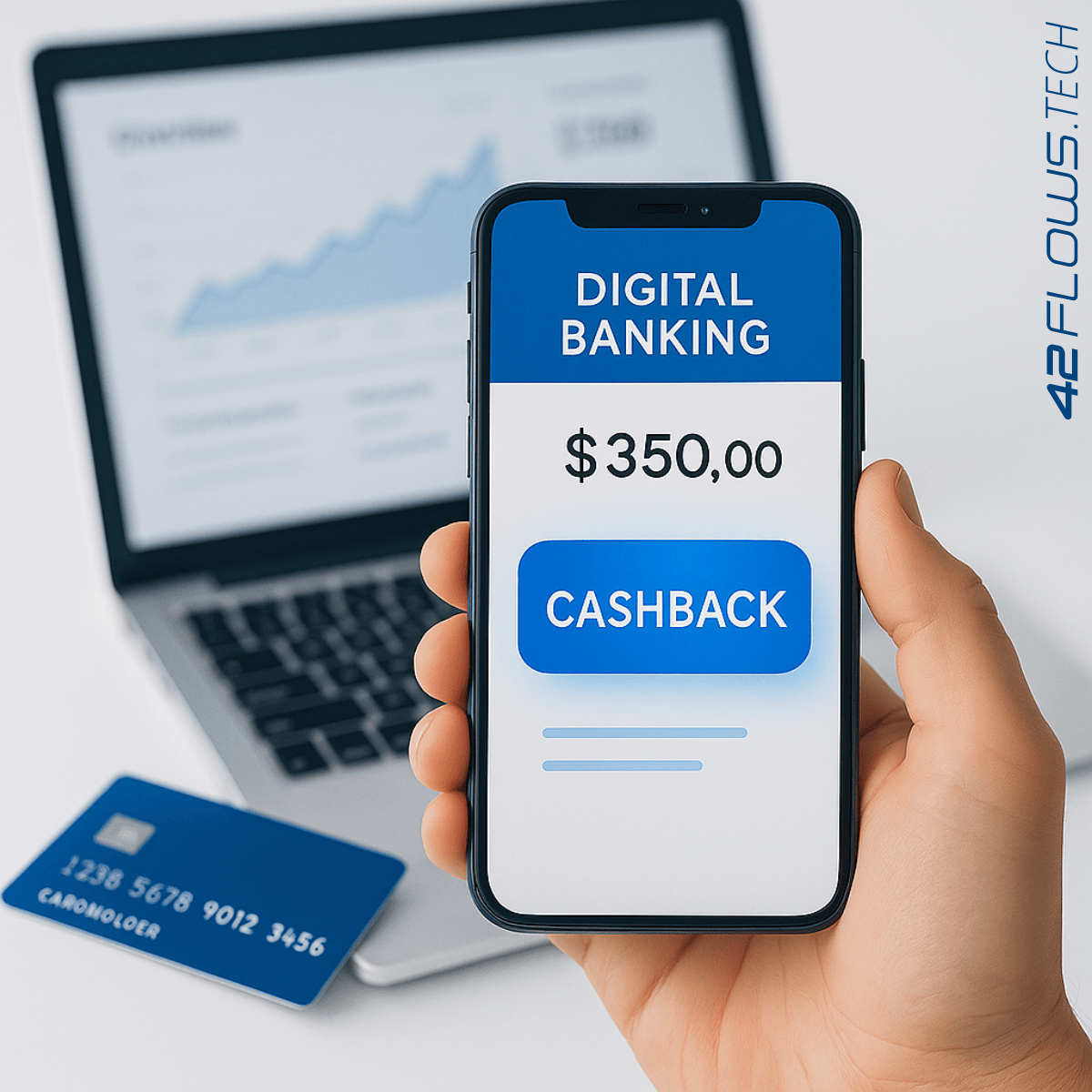

Bank cashback is a nice bonus for a customer. But why does the bank need it? Obviously, it’s not about charity. Cashback is a profitable tool that can increase the number of transactions and revenues, as well as increase customer loyalty and retention. According to a study by Statista, 53% of respondents named cashback as one of their favorite loyalty options. So let’s take a look at how this affects the work of banks, what are the current trends, and what modern solutions are available to optimize processes.

Is cashback a direct operating expense? This perception is superficial. In fact, it is a capital investment in customer loyalty and business growth. After all, cashback is part of the interchange fee. On the one hand, the bank really gives customers a part of its income. On the other hand, it increases card usage activity. Therefore, an increase in the volume of transactions correlates with an increase in the bank’s profitability.
Most importantly, cashback programs stimulate customer activity “on-us” (within the bank’s ecosystem). As a result increases average transactions per user, increases average ticket size, and significantly reduces churn rate.
In addition, each transaction is a source of crucial behavioral data. These transactions can be used for in-depth analysis, segmentation, modeling consumer behavior, and identifying upsell or cross-sell opportunities. For example, regular purchases at pharmacies are a likely trigger for personalized offers for the purchase of medicines.

Even a moderate cashback rate — ranging from 1% to 2% — generates higher ROI by increasing Customer Lifetime Value, reducing the cost of attracting and retaining customers.
Initially, there were elementary mechanisms for direct cashback. Modern technological advances have made it possible to provide dynamic offers. Hyper-personalization is a key vector of development: when a customer receives not only general cashback opportunities, but also individualized rewards adapted to specific consumer patterns.
Cashback is now not only about refunding part of the expenses in cash. The trend is to create a digital ecosystem in which customers can accumulate points or bonuses and use them in a wide network of bank partners. These include various services and stores operating in online and offline niches. This approach allows us to “lock” the customer into the bank’s digital ecosystem and increase their Share of Wallet.
Another powerful trend is the gamification of loyalty programs. The customer not only accumulates money or points on the cashback account, but also reaches certain “levels” to open new cashback categories or increase the percentage of return. Additional activities include prize draws and challenges. They increase engagement and also stimulate the necessary behavior: for example, increase the amount of spending in a particular product category.

So how do you achieve this unprecedented level of personalization? This will be discussed in the next section.

The biggest modern breakthrough in the field of bank cashback is the integration of AI-based tools.
In this context, artificial intelligence is a tool capable of processing huge amounts of data: transaction history, time of day, geo-position of purchases, and the digital footprint of each customer. In-depth analysis allows the system to build complex behavioral models and predict the likelihood of subsequent activities in certain product categories and locations. In addition, the system is able to identify growing segments, notice trends and potentially problematic categories.
What is the result? The analysis data helps to automatically select and dynamically adapt cashback offers for each micro-segment of customers in real time. This helps to achieve two strategic goals:
This is a direct way to increase ROI.
The main condition for successful integration and growth of cashback programs is deep and seamless integration with key bank systems. There is no point in creating an “extra layer” over the outdated infrastructure: it is inefficient and does not provide room for scaling.
That is why flexible implementation systems are now in use. Let us consider the key ones.
In this case, the software for the cashback platform is installed on its own servers within the banking infrastructure. The bank has full control over the data and opportunities for customization. Additionally, the compliance of the program with internal policies and regulatory requirements is guaranteed. However, this approach requires significant investments and the involvement of substantial IT resources for installation, configuration, support, and updates.
This is a cloud infrastructure that serves the needs of a particular bank. The cloud can be located either in the bank’s data center or at the facilities of an external provider. This is a compromise between flexibility and high security. The solution complies with regulatory requirements, but also ensures more efficient use of resources. Among the disadvantages: the complexity of management and support.
While not a deployment model, API-first is a digital-first philosophy of third-party providers. This approach is as fast as possible to deploy, flexible, and scalable. It significantly reduces the burden on the bank’s IT infrastructure and allows it to focus on strategically important processes. It also makes it possible to apply the “pay-as-you-go” model — to pay only for the resources used. However, this method requires the creation of a strong data security management system in accordance with PCI DSS and GDPR.

This is not a deployment model, but a digital philosophy concept that can be applied to any of the above solutions. It’s all about stable, well-documented APIs. They ensure fast and seamless integration, and preserve the ability to develop and introduce new features or products. These can include, for example, ROI calculators for preliminary modeling, visual scenario builders for flexible program customization, and integrated security modules based on biometrics and tokenization.
The main challenge in setting up modern loyalty programs for banks is the lack of cost transparency in the integration, configuration, and use of cashback software. It happens that a company invests a lot of money and does not understand how this investment will affect the main business indicators.
That is why modern cashback software developers provide analytical tools to accurately measure the effectiveness of each element: from a specific category of cashback to an individual offer for a customer. This means that it is possible not only to evaluate the results but also to model the potential benefits of different scenarios and direct investments to the most profitable segments.
Another cost optimization strategy is co-financing loyalty programs with partners. After all, stores and services also benefit from a steady flow of customers and increased sales.
Among the solutions that have already shown results is the system from 42Flows.tech. It is focused specifically on the needs of the banking sector, deeply integrates with processing and CBS, and allows launching personalized cashback programs in 2–4 weeks.
The result is up to +20% of active cards, an increase in the frequency of transactions and the total amount of spending per customer. It is especially important that the AI personalization module allows you to optimize costs and focus cashback on those segments where it brings the highest ROI.
Therefore, it is obvious that cashback is not just a nice little thing to increase loyalty but a powerful strategic tool. It allows you to earn more, build long-term relationships with your target audience, and compete confidently in the market.
Ready to turn cashback into a strategic asset for your bank?
Contact us today at success@51.20.208.231 — let’s boost your customer loyalty, revenue, and engagement with tailored cashback solutions!
Let’s talk. Just enter your details and we will reply within 24 hours.


 Maksym Popov